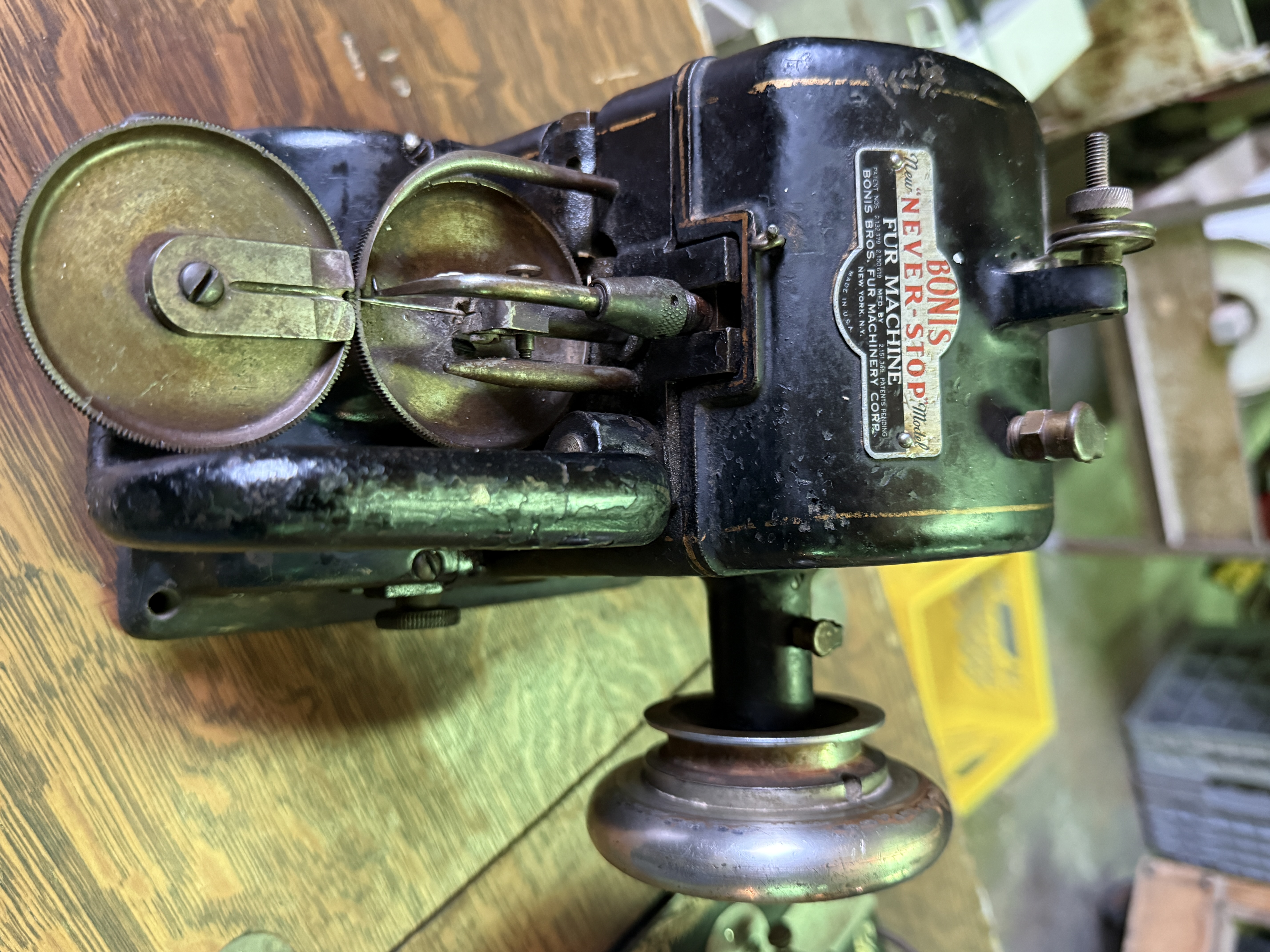
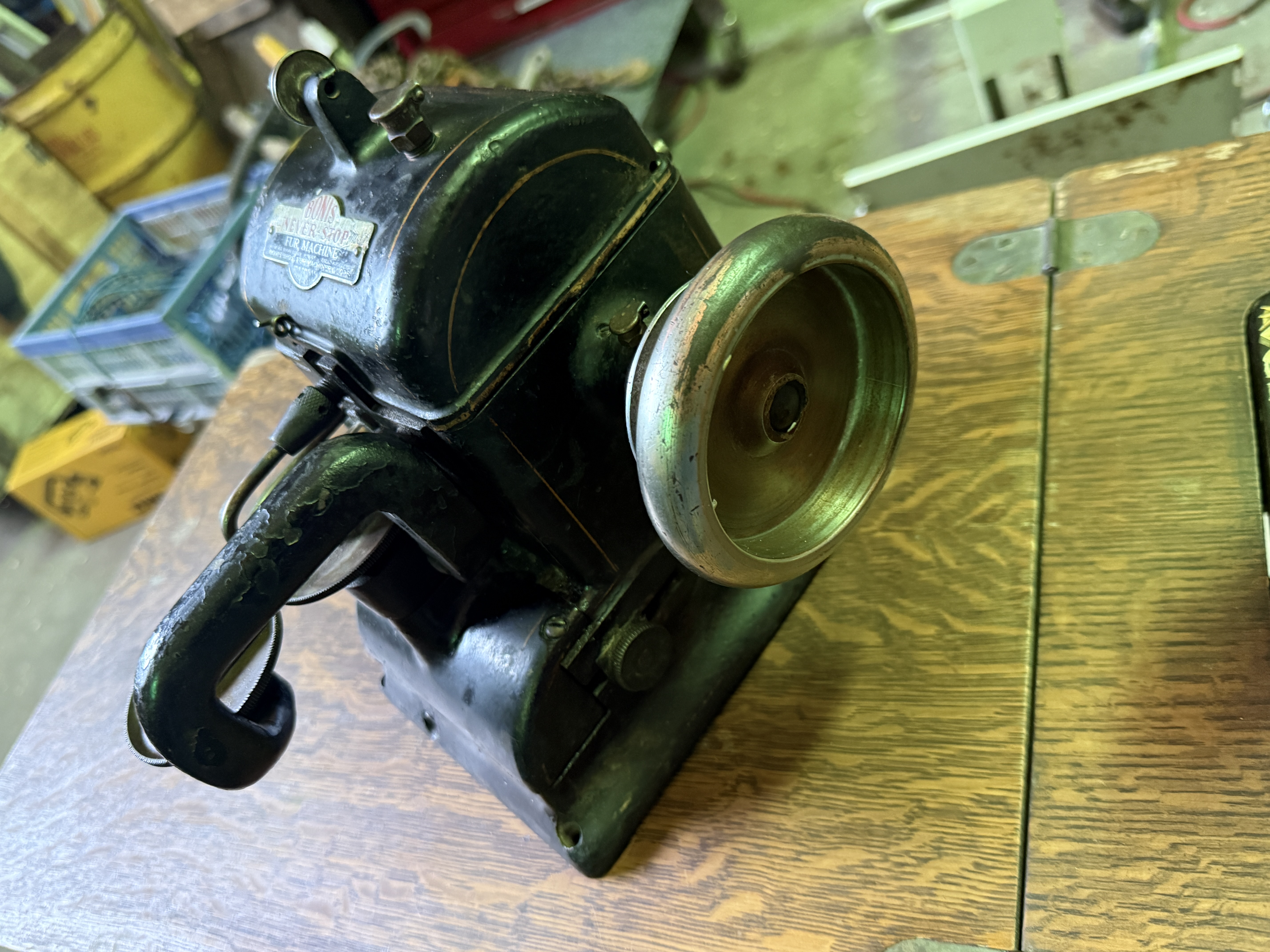
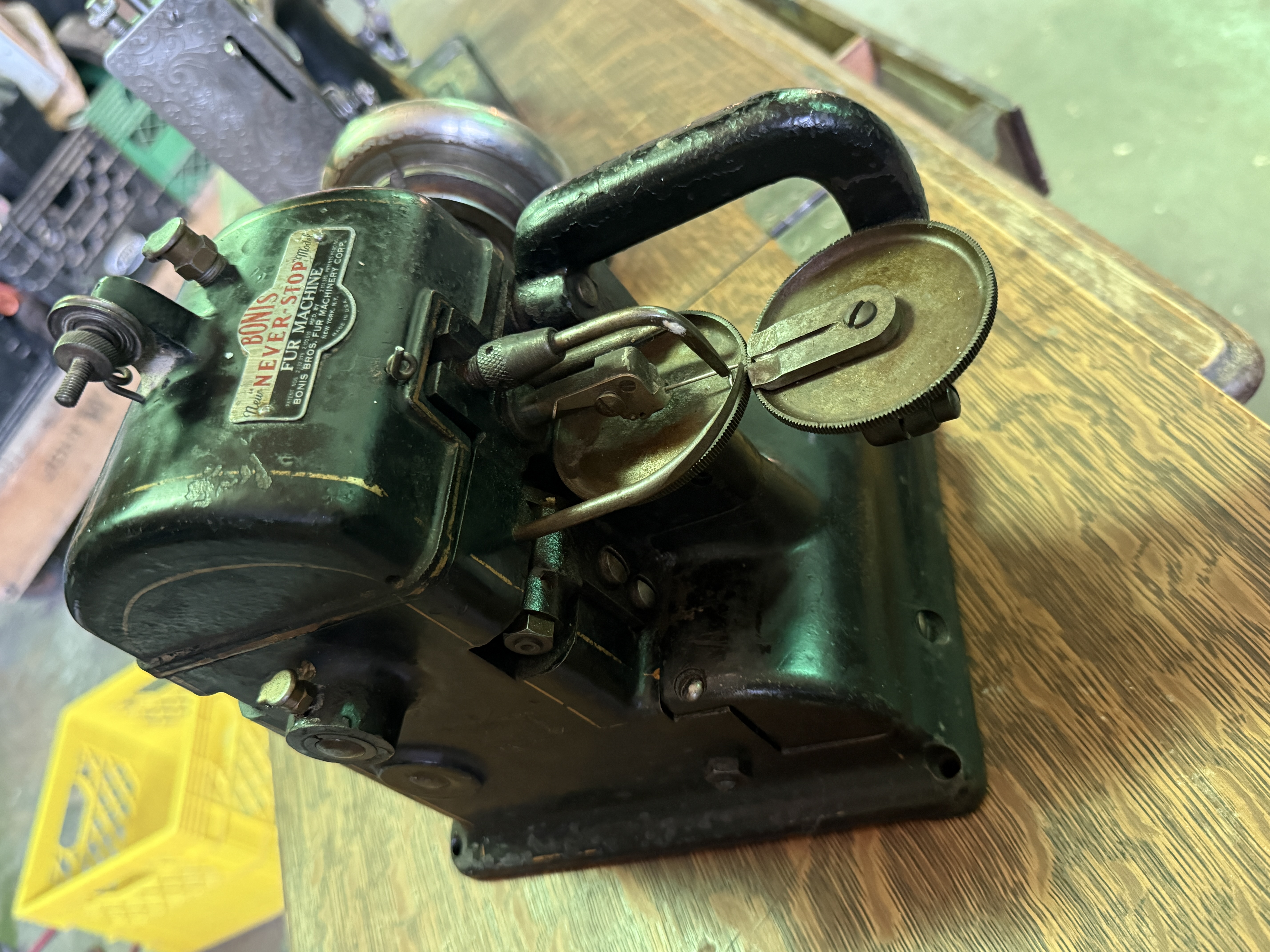
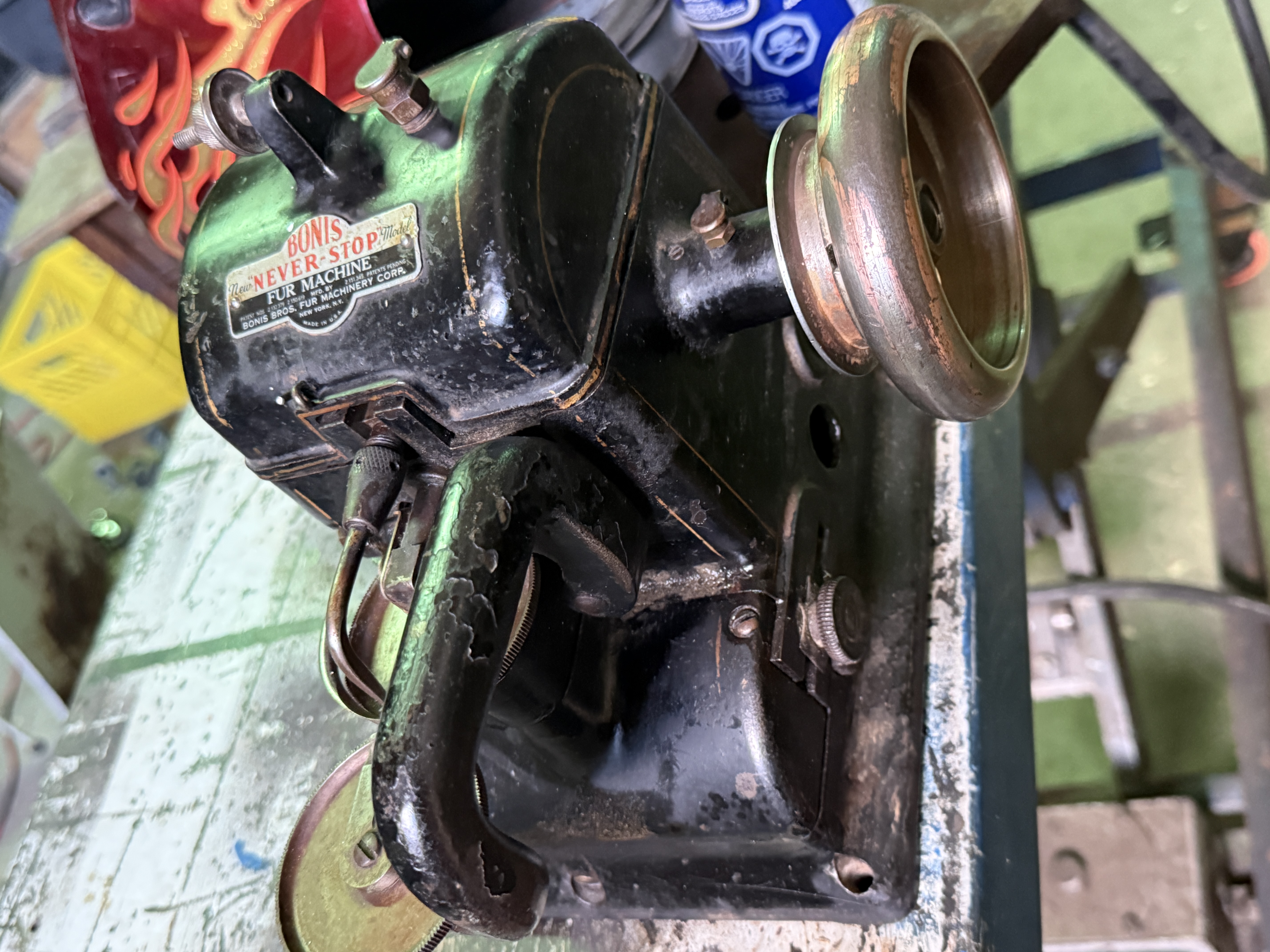
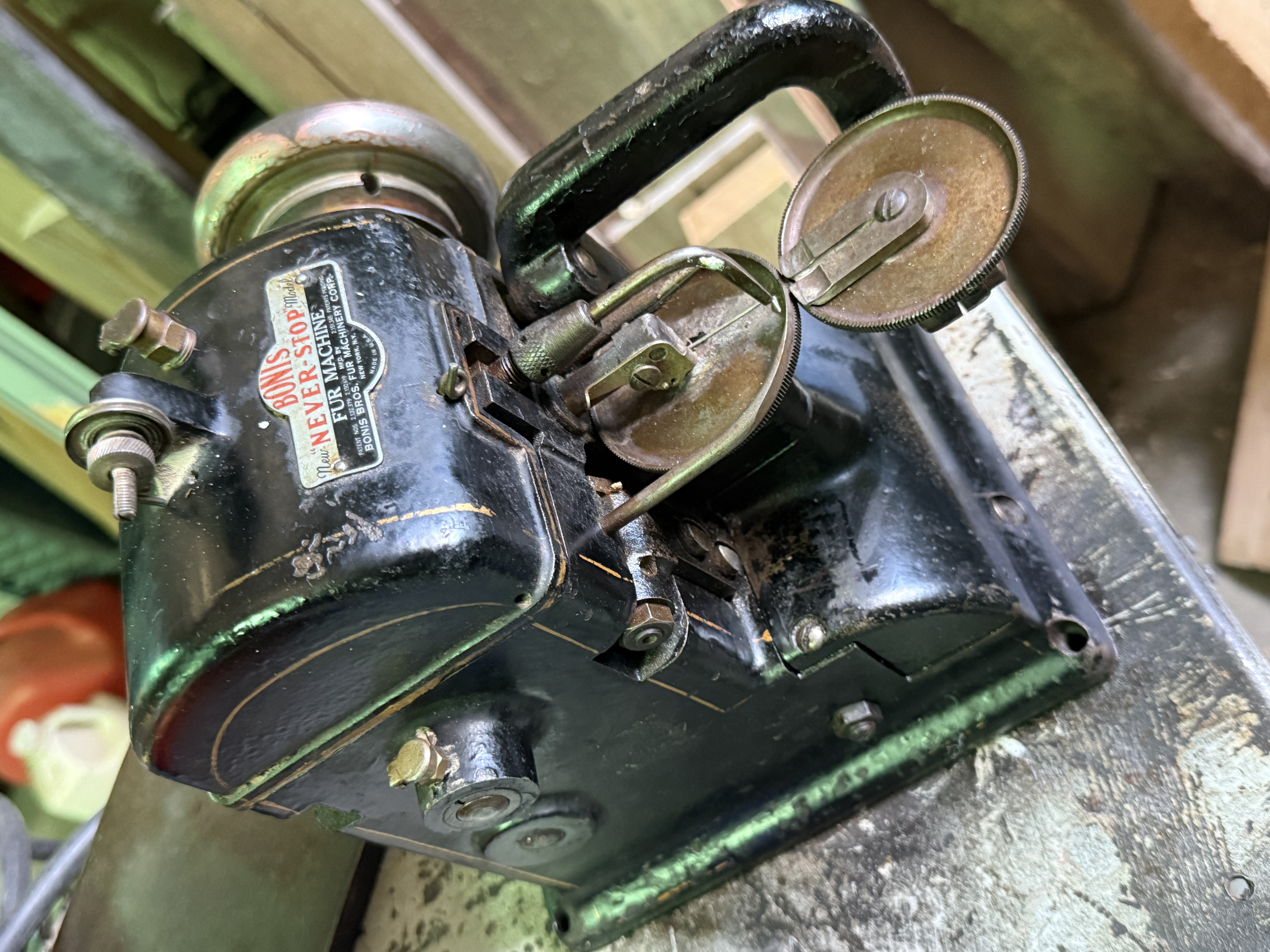
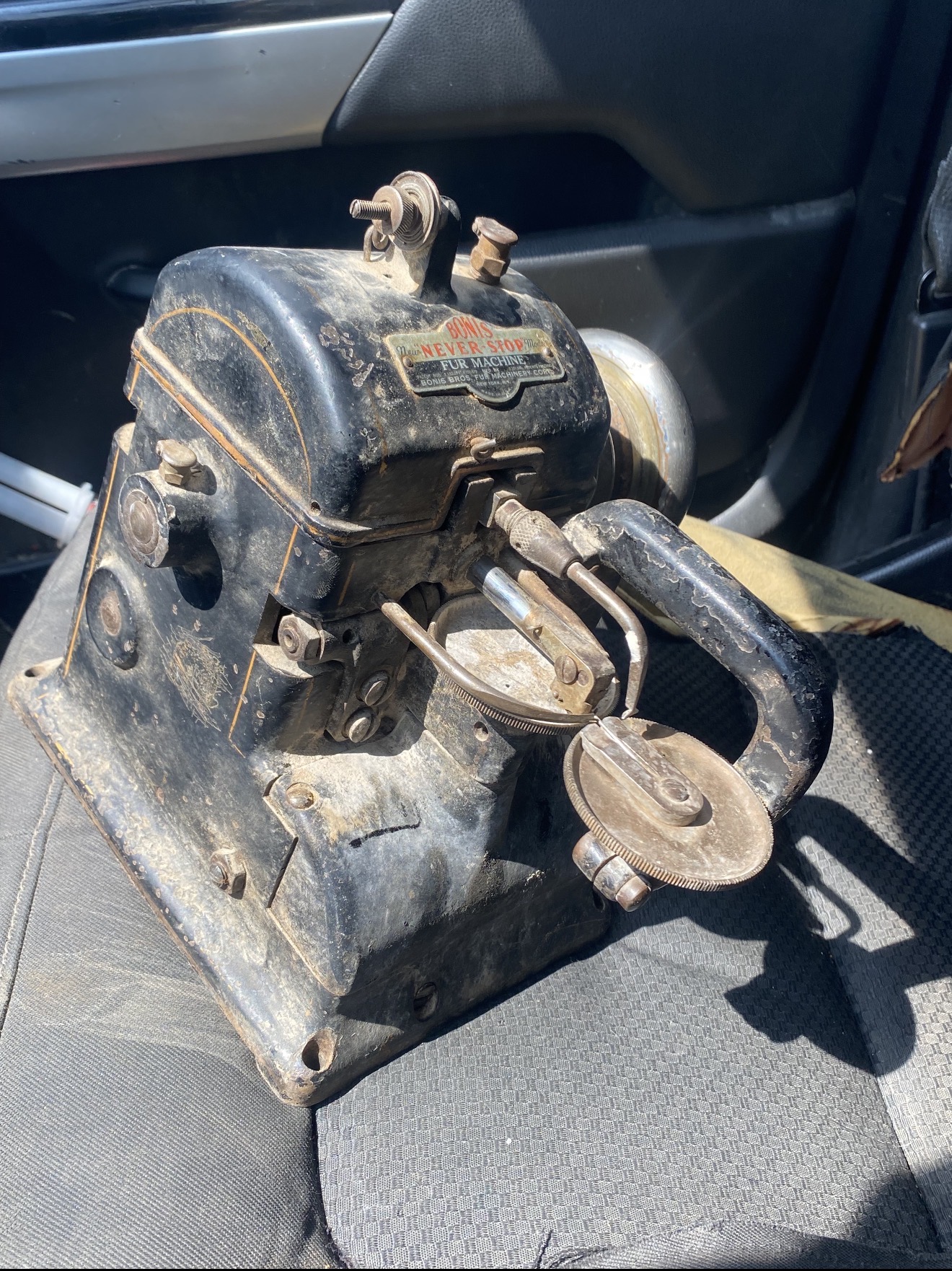
Bonis "Never-Stop" Fur Sewing Machine, Bonis Bros., New York, Patents 2,132,379 & 2,150,619
A Bonis "Never-Stop" fur sewing machine by Bonis Bros. of New York, the firm whose name became synonymous with fur machinery in the twentieth century. It was made in the heart of the New York fur trade, and this specialised overedge stitcher was the working tool of the furrier's bench. It joined pelts with a fine, flat seam that disappears into the fur. The Bonis Brothers and the New York Fur District In the first half of the twentieth century, New York's garment district was the centre of the world fur trade. Thousands of small workshops between Sixth and Eighth Avenues cut, matched and sewed pelts into coats, stoles and collars. Bonis Bros. supplied these shops with purpose-built machines, and Caesar Bonis of Brooklyn led its engineering work. The firm registered the "Bonis Never Stop" trademark for fur sewing machines in 1938. The mark was first used in commerce in May of that year and was renewed until 1999, a sixty-year run that shows how long the name held its place in the trade. A Bonis Never-Stop fur machine is held in the collection of Ingenium, Canada's national museums of science and innovation (artifact 1984.1162.001). The Patents This machine bears two patents granted to Caesar Bonis. Both applications were filed on the same day, 30 April 1938, and together they explain the name. U.S. Patent 2,132,379, Fur Sewing Machine (granted 11 October 1938). Bonis set out to cure the chronic faults of fur machines of the day: needles bending or snapping, and stitches slipping, both caused by wear and play in the moving parts. He guided the needle-bar yoke on an adjustable V-shaped slideway so it could not wobble out of line with the needle guard. He also connected the looper frame to its rocker through an adjustable ball joint with a split, tightenable bearing, so wear could be taken up rather than tolerated. U.S. Patent 2,150,619, Lubricating System for Fur Sewing Machines (granted 14 March 1939). This is a self-oiling top cover. Oil is held in a reservoir built into the cover, and wicks release it onto the mechanism only when the machine's own vibration while running shakes it free. A small ball valve seals the reservoir when the cover is lifted off and turned over. A machine that held its alignment and oiled itself was a machine that kept running. "Never-Stop" was not idle marketing. How It Works Unlike a conventional sewing machine, a fur machine feeds the work vertically between two rotating steel discs. The edges of two pelts are placed together, fur side in, and a horizontal needle and looper form a fine overedge chain stitch across them. When opened flat, the seam lies hidden beneath the fur. The process required skill and an exact machine, and Bonis machines were built for exactly that. Condition [Describe: original finish / wear, decals and plates present, serial number if found (often stamped inside the top), motor or treadle, stand, whether it turns freely and stitches.] Provenance & Documentation Manufacturer: Bonis Bros., New York Model: Never-Stop Patents: U.S. 2,132,379 (1938) and U.S. 2,150,619 (1939), Caesar Bonis, Brooklyn, N.Y. Trademark: "Bonis Never Stop," U.S. Reg. No. 361,488 (1938) Serial number: [____] Copies of both original patents accompany the machine.